
Why I Hate “AI Art”
Part 1: Because it makes me feel sad, hollow, and alone in the whole world.

AI isn’t art. AI is opposed to art – by its very definition. Instead of being man-made – something created by humans – so called AI art is a collection of already created artworks that have been matched together in an “intelligent” way, a collage assembled according to rules of predictability. What comes out on the other side may look like art, but it isn’t art. We can be captivated by it, even impressed, but it’s a short-lived and shallow pleasure, a bit like looking into a kaleidoscope and enjoying the beautiful but completely random patterns in it. You tire of it quickly.
The shota AI boom
AI art has exploded in the shota world, and at first I was captivated. I mean, how can’t you be when you see for example this AI work by Xie Fenghua:
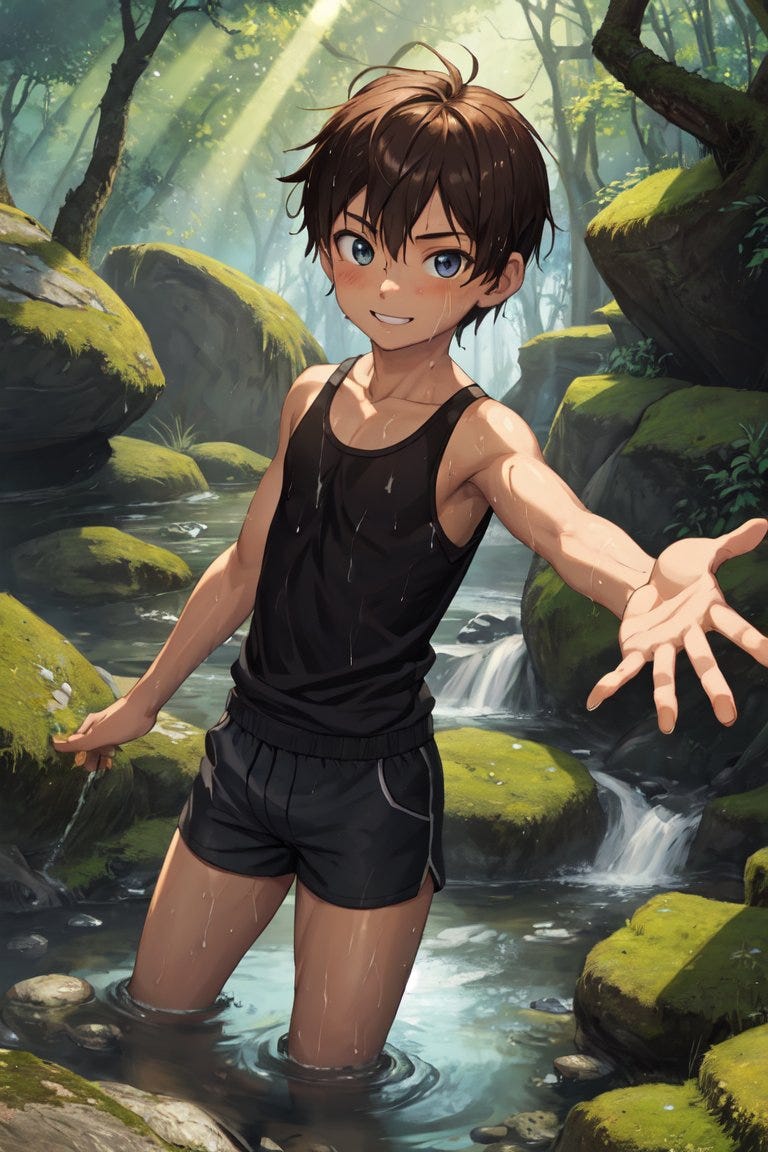
So now you didn’t need to be an artist to create shota expressions! You just download a model on Civitai, import it to your locally run AI app, write a prompt, set the parameters, and boom – a shota!
Lots of people did that. In fact, so many people did it that AI shota started to flood the feeds of shota hubs like X and Pixiv. Drawing by hand takes time. Letting the computer do it takes five minutes, and even if the better AI illustrations out there are the results of several rounds of tweaking and polishing, they still take a fraction of time to make compared to shota drawn by hand.
Japanese X discussed how to mark these AI works so that people wouldn’t be fooled into thinking they were made in the traditional way. Various tags were proposed, and I pitched in that “shorter is better.” But no matter the tag, the consensus seems to have become that you should at least always tell that you used AI in your work.
As for Pixiv, they added a checkbox for whether a work is “AI-generated,” and offered the users to hide all AI content through the simple toggle of a switch, just like they let the users choose whether or not they see “sensitive content,” “explicit content,” and “ero-guro content.” That’s the way to do it, I think. Amazon and Youtube also ask creators to check a box about whether AI was used, but it remains to be seen what they’ll do with this info, because so far I haven’t found a way to hide AI content on Youtube.
Why AI isn’t art
But why filter out AI works, and not 3D renders, or works created through some other technology? Because isn’t that what AI is, a technology? Just another tool for artists, like Photoshop, rasters, and even various kinds of pens? NO! Stop this relativism. AI is not just a tool. Of course, it can be argued that an AI work is the result of a carefully crafted and perfected prompt, making the creator a “prompt artist,” but no. Even if there is an element of human will in the creation – there has to be, since AI has no will – this part of the process is too small for AI to qualify as “just a tool” in the same way as other technologies do. In other technologies, the human is still in control. AI is more like a slot machine loaded with all the artworks of humanity, and every time you pull the lever, it spurts out a new uncanny combination of what artists have already created. Like a kaleidoscope.
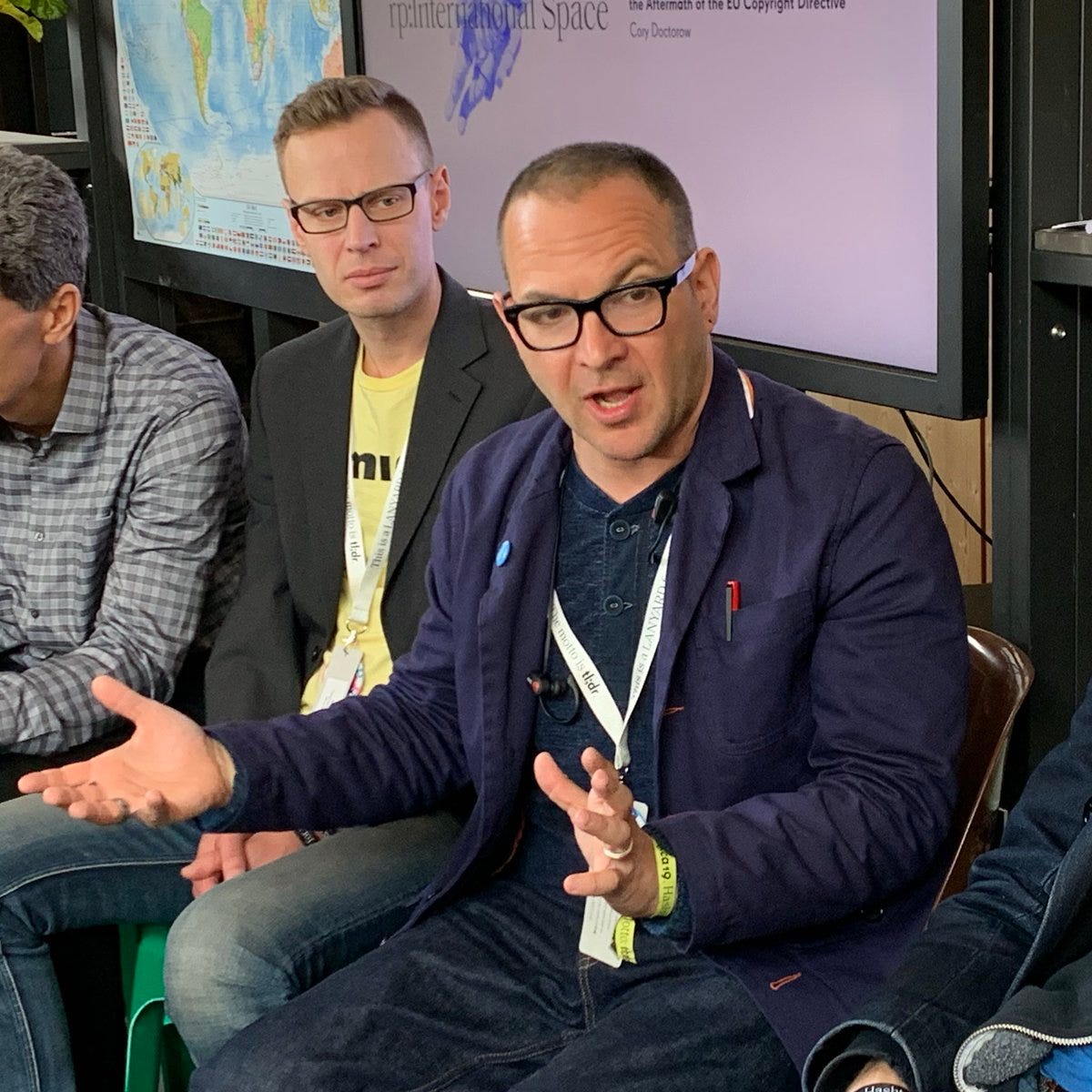
Another way to put this is that human creativity is the exercise of decision. Every time you create something, you make countless little decisions about where to draw the line, which words to use, and so on. That’s how Cory Doctorow describes it in his essay Why I don’t like AI art from March 2025. And his point is that that is what art is: transplanting the feeling I have inside my head into your head, by means of writing a novel, drawing a picture, etc, where each of those tiny decisions serves to make this process as smooth as possible, to let you receive as intact an image as possible inside your head after you have consumed my artwork. I just loved that text.
AI art, on the other hand, doesn’t contain any decisions at all. That’s what makes it so shallow and hollow. What we like in actual art are all those decisions that the artist made, and, by extension, the idea that the artist was trying to convey something to us. That makes us feel less alone – someone was talking to us! Artists are even talking to us from the past; art is a magic medium through which we can take part of the experiences, thoughts and innermost feelings of long since dead people! And that also explains why we can feel so hollow after consuming AI works, because although they might look like art, there is nothing in them – there is no message that someone has tried to convey to us. No one is talking to us! And that makes us feel alone. Abandoned. Tricked.
But many people don’t seem to care about this. For many, AI art is “good enough.” Differing between human art and AI content, as I do above, seems to be more important for people who either are artists themselves, or have an artistic mindset. I agree with the Oatmeal:
In my experience, the people who are excited about AI art also happen to be some of the most talentless fucking people I’ve ever met.
This is exactly my experience too. I live in two worlds. In one of them, all my friends and acquaintances are creative professionals, working in media, as freelancers, artists, podcasters, correspondents, and what not. In the other world, you may call it “the gym” or “the pub” (I don’t want to be too specific), people have “normal” jobs, no one cares about my research or even knows I’m doing it. I’m just “one of the guys” – and that’s great! Well, guess which crowd is excited about “AI art,” keeps showing their work to the rest of us, is impressed by it? Images, music, video – it’s all AI! And it’s the “normal” crowd, of course, who is excited about it. Why? Because for the first time they feel like creators! With minimal effort, they get to say “I made this.” As all creators know, that’s a great feeling, but as all creators also know, it only comes after hard work, after hours and days and years of devoting yourself to your craft. But “AI art” is good enough for the “normal” crowd to let them both eat the cake and have it. Feeling like creators without the investment. Whereas the creative crowd doesn’t care about AI or is even disgusted by it. The creatives create.
However! I think an AI phase is warranted. And in the next post, I’ll give you a juicy report from my own experiments with this new technology.
Talk to you tomorrow!
/Karl